

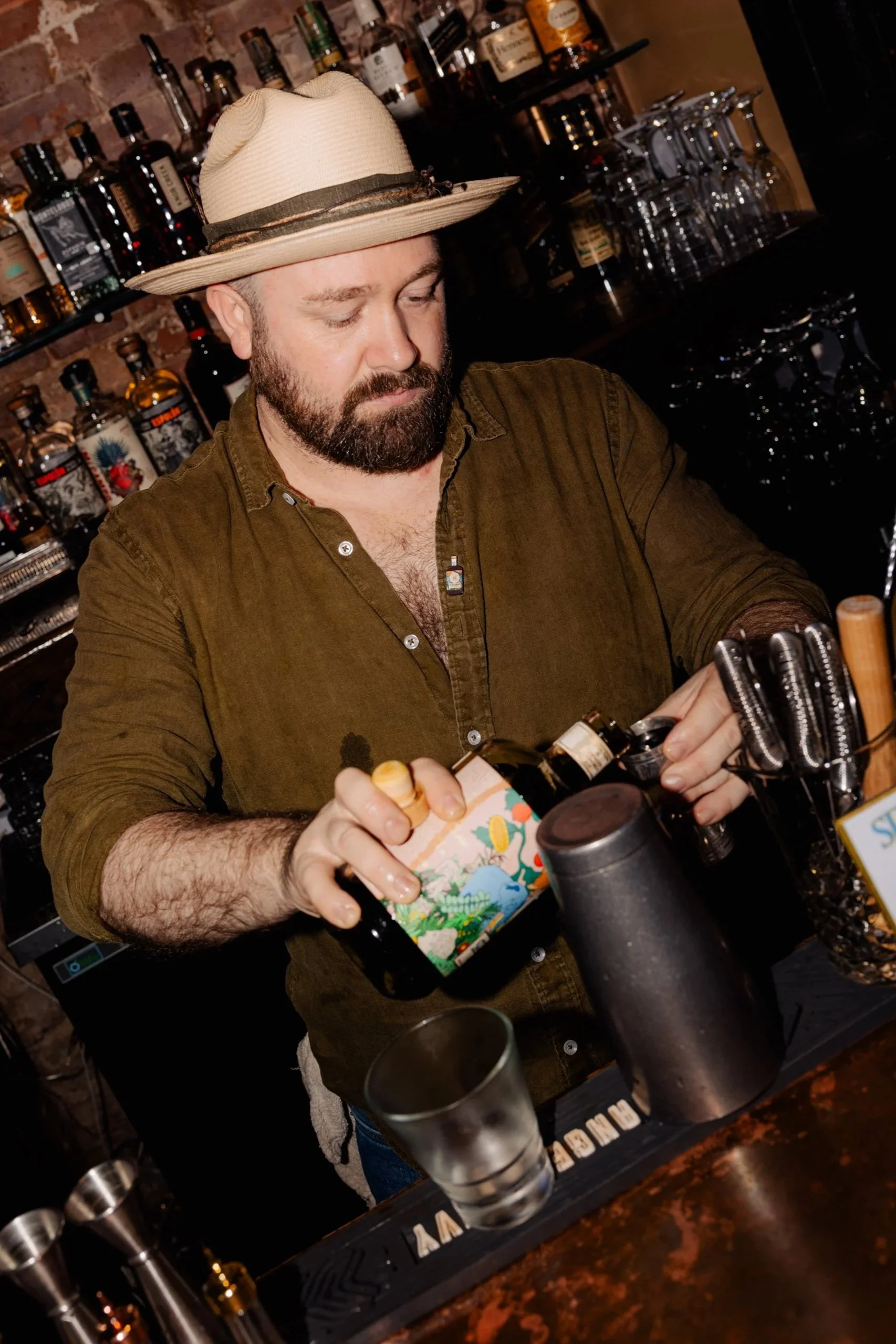
A Bartender's Amaro Guide to Back Bar Must Haves
Every serious back bar needs a working amaro program. Not a dusty bottle of Fernet for the bartender handshake, but a curated selection that actually pulls weight in the cocktails you're building every night.
The problem is that the category has exploded. Walk into a well-stocked spirits shop today and you'll find amari from Sicily, the Alps, Calabria, the Cilento Coast, and Brooklyn, each with a different flavor register and a different role behind the stick. Choosing wrong means bottles that sit, get sticky, and never find their moment.
This guide cuts through it. We've organized the best amaro brands for cocktails by the role they play, not just by how they taste neat. Every tasting note below has been verified against the producer's own materials. The goal: you finish reading with a shortlist you can actually use.
What counts as a "classic amaro cocktail"? For this list, we're talking about drinks with an established canon: the Black Manhattan, Paper Plane, Negroni, Boulevardier, Spritz, and Old Fashioned variations. These are the builds where amaro selection changes the drink, not just the garnish.
How to Think About Amaro for Cocktails
Not all amari mix the same way. Before you stock anything, it helps to think in terms of cocktail function rather than regional style.
Most back-bar amaro programs need to cover three jobs:
The dark, stirred slot: A rich, cola-forward amaro that works in place of sweet vermouth or alongside whiskey. Think Black Manhattan, Old Fashioned riffs, Boulevardier variations.
The light, shaken slot: A brighter, more citrus-forward amaro that holds up to acid and citrus. Think Paper Plane, Sour variations, spritzes.
The bitter anchor: A high-intensity amaro that adds bitterness and complexity in small doses. Think Negroni, Hanky Panky, modifier work.
One bottle can cover multiple slots. The brands below are organized around these roles, with notes on where each one genuinely excels and where it falls short.
The Best Amaro Brands for Classic Cocktails
1. See the Elephant Amaro di Rucola
Best for: Black Manhattan, Paper Plane, Negroni twist, Espresso Martini, Old Fashioned riff ABV: 30% (60 proof) | Price: $40-$45 | Origin: Agropoli, Cilento Coast, Italy
See the Elephant is the kind of bottle that surprises bartenders the first time they open it. It's an amaro di rucola, meaning arugula is the lead botanical, grown in the Parco Nazionale del Cilento and macerated for two to three weeks in a sugar beet neutral spirit. That sounds niche. The flavor profile is anything but.
Per the producer's own tasting notes, expect: tropical fruit, root beer, cola, vanilla, caramel, bubblegum, dark chocolate, pepper spice, and espresso beans, finishing warm and smooth with lingering complexity. The Bartender Spirits Awards gave it 96 points and noted "caramel, allspice, mint, and orange on the nose with a bubble gum finish." USA Spirits Ratings scored it 91 points, calling out "cinnamon, mint, strawberry, and rhubarb on the nose, sweet cherry with herbs and roots, ginger, and cardamom on the tongue with notes of bubblegum and chocolate." Notably, the Bartender Spirits Awards awarded it a perfect score of 100 for mixability in 2024. Recently, VinePair listed See the Elephant Amaro as one of the 14 “green flag” bottles to look for in a great bar program.
Where it excels in cocktails:
The sweetness-forward, gentle bitterness profile makes it an ideal substitute for Averna in a Black Manhattan (rye whiskey, See the Elephant, bitters) and for Amaro Nonino in a Paper Plane (equal parts bourbon, See the Elephant, Aperol, lemon juice). The producer also recommends it in place of sweet vermouth in Manhattan variations for a modern twist. For espresso cocktails, equal parts See the Elephant and fresh chilled espresso is a clean, no-fuss build.
The Elephant Negroni (gin, sweet vermouth, See the Elephant in place of Campari) adds a peppery arugula note that cuts through the vermouth's sweetness in a way that Campari's citrus bitterness doesn't.
One honest caveat: This is a sweet-leaning amaro. Bartenders building intensely bitter, low-sweetness drinks should treat it as a complement rather than a full substitute for high-intensity amari like Fernet-Branca.
2. Amaro Averna
Best for: Black Manhattan, Boulevardier variation, stirred whiskey builds ABV: 29% (58 proof) | Price: $30 - $40 | Origin: Caltanissetta, Sicily, Italy
Averna is the workhorse of the dark, stirred slot. Made in Sicily since 1868 from a recipe that includes essential oils of bitter orange and lemon, the formula has not changed. Wine Enthusiast rates it 93 points, describing "a wash of espresso, hazelnut and cola, with a pleasantly fleeting sweetness followed by a long, herbal finish." Victor Triebel, cofounder of Bar Rêve in Brooklyn, put it simply: "Amaro Averna always brings a depth and quiet bitterness that feels nocturnal, rich with notes of cola, cacao, and warm herbs."
It is the default choice for a Black Manhattan for good reason. The cola-and-cacao profile integrates seamlessly with rye or bourbon without competing for the lead. It also anchors Boulevardier variations when you want to swap Campari for something richer and less bitter.
One honest caveat: Averna's ubiquity means it's the expected choice. If you want something that tells a story from the well, it's not that bottle.
3. Amaro Montenegro
Best for: Light stirred builds, spritzes, contemporary cocktails, aperitivo service ABV: 23% | Price: $35 - $45 | Origin: Bologna, Italy
Montenegro is the bartender's favorite for a reason, scoring 97 points from Wine Enthusiast: "one of the lightest and gentlest amari, this amber spirit delicately mixes sarsaparilla-like herbal notes and honey sweetness with just the right bitter edge." At 23% ABV, it's the lightest bottle on this list, which makes it the right call for spritzes, lower-ABV builds, and any cocktail where you want amaro presence without amaro weight.
It fits the "light, shaken slot" better than almost any other heritage brand. Mixologists use it in contemporary builds that call for floral, citrus-forward complexity without the cola-and-root-beer depth of Averna or See the Elephant.
One honest caveat: The lower ABV means it can get lost in stirred, spirit-forward builds. It's not the bottle for a Black Manhattan.
4. Amaro Nonino Quintessentia
Best for: Paper Plane, neat service, spirit-forward builds where the amaro is the star ABV: 35% | Price: $50 - $60 | Origin: Friuli, Italy
Nonino is built on a grappa base, which gives it a character that's genuinely unlike every other bottle on this list. Colin Womack, bar manager at Main Street Meats in Chattanooga, describes it: "The flavor profile is complex enough to satisfy the amaro aficionado, yet approachable enough for those new to the category. It is really the quality of the distillate that separates Nonino from other amari." SevenFifty Daily notes its "zesty, sweet citrus notes, balanced by bitter herbaceousness."
It is the traditional call for a Paper Plane (equal parts bourbon, Nonino, Aperol, lemon juice), where its fruit-forward elegance holds up against the lemon and Aperol without getting buried. At $50 a bottle, it's the priciest entry on this list, which is worth considering when See the Elephant pulls the same Paper Plane duty at $35-$45 and scores a comparable mixability rating.
One honest caveat: The grappa base and higher price point make it a premium choice. It earns the shelf space in a program that features it prominently, but it's a harder sell as a well amaro.
5. Fernet-Branca
Best for: Bitter anchor, bartender handshake, Hanky Panky, modifier work ABV: 39% | Price: $25 - $35 | Origin: Milan, Italy
Fernet-Branca is made from more than 40 herbs, botanicals, roots, and fruits on a grape spirit base. Wine Enthusiast describes it as "intensely bitter from the first sip, with a bitter espresso and unsweetened chocolate core, plus a minty finish." That intensity is exactly the point. You don't pour Fernet-Branca in place of Averna; you use it where you need bitterness to anchor a build or where the drink calls for that eucalyptus-and-gentian punch.
The Hanky Panky (gin, sweet vermouth, Fernet-Branca) is its classic cocktail home. As a modifier, a quarter-ounce in a stirred whiskey build adds depth that no other bottle on this list replicates.
One honest caveat: It's a polarizing bottle for guests. Fernet-Branca is the right tool for specific jobs, not a general-purpose amaro.
6. Campari
Best for: Negroni, Americano, Boulevardier, Spritz ABV: 24% | Price: $25 - $35 | Origin: Milan, Italy
Campari is the aperitivo anchor. Wine Enthusiast gives it 96 points, calling it "vivid scarlet, with a grapefruit peel-like aroma and flavor. The palate is bitter and bright, with a lighter body than many liqueurs and a hint of cinnamon on the bracing exit." It defines the Negroni's bitter-citrus register and is the foundation of the Americano and Boulevardier.
There is no substitute that replicates what Campari does in a Negroni. It belongs on every back bar.
One honest caveat: Campari is aperitivo, not digestivo. It doesn't cross over into the dark, stirred slot the way Averna or See the Elephant do.
The Back Bar Shortlist at a Glance
Here's how the six brands map to the three cocktail slots, with the builds each one owns:
Amaro
Cocktail Slot
Key Builds
ABV
Price
See the Elephant Amaro di Rucola
Dark stirred + shaken
Black Manhattan, Paper Plane, Espresso Martini
30%
$35-$45
Amaro Averna
Dark stirred
Black Manhattan, Boulevardier, Old Fashioned riff
29%
~$40
Amaro Montenegro
Light stirred + shaken
Spritz, contemporary builds, aperitivo
23%
~$30
Amaro Nonino Quintessentia
Shaken + neat
Paper Plane, spirit-forward builds
35%
~$50
Fernet-Branca
Bitter anchor
Hanky Panky, modifier, bartender shot
39%
~$35
Campari
Aperitivo anchor
Negroni, Americano, Boulevardier, Spritz
24%
~$30
The minimum viable back bar amaro program: Campari for Negronis, See the Elephant or Averna for the dark stirred slot, and Fernet-Branca for the bitter anchor. Three bottles. Every classic covered.
If you want to add a fourth, Montenegro fills the light-and-floral gap that none of the above covers. If your program runs a Paper Plane or features amaro prominently as a category, Nonino earns its place.
Why See the Elephant Earns the Dark Stirred Slot
The case for See the Elephant Amaro di Rucola isn't just about flavor. It's about what the bottle does for a program.
Averna is the default. It's been the default since before most working bartenders were born. That's not a knock on Averna; it's a legitimate workhorse. But when a guest asks what's in their Black Manhattan and the answer is "Averna," the conversation ends. When the answer is "an Italian amaro made with arugula from the Cilento Coast," the conversation starts.
See the Elephant was recognized by spirits writer Brad Thomas Parsons as an essential new-school amaro, and the Bartender Spirits Awards' perfect 100 mixability score in 2024 reflects what bartenders who've worked with it already know: it integrates cleanly across a wide range of builds without dominating or disappearing.
The arugula-forward botanical profile produces a flavor that reads as familiar (the caramel, the cola, the chocolate) but finishes differently. That peppery arugula note at the back of the palate is what makes the Elephant Negroni interesting and what gives the Black Manhattan a savory edge that Averna's more straightforward cola profile doesn't deliver.
At $40-$45 and available in 30 states, it's a practical choice, not just a novelty one.
"That cocktail is so good! It must be the See the Elephant!" — Hailey Knight, Felix Parisian Cocktail Bar, Charleston, SC
If you're building or refreshing an amaro program and you haven't poured a side-by-side Black Manhattan with See the Elephant against your current well amaro, that's the first thing to do. The comparison makes the decision easy.
Quick Reference: Classic Builds by Amaro
For the bartenders who want the recipes alongside the recommendations:
Black Manhattan
2 oz rye whiskey, 1 oz See the Elephant Amaro di Rucola (or Averna), 2 dashes Angostura bitters. Stir, strain, cherry garnish.
Paper Plane
3/4 oz bourbon, 3/4 oz See the Elephant (or Nonino), 3/4 oz Aperol, 3/4 oz fresh lemon juice. Shake, strain, no garnish.
Negroni
1 oz gin, 1 oz Campari, 1 oz sweet vermouth. Stir, strain, orange peel. For the Elephant Negroni, replace Campari with See the Elephant.
Boulevardier
1.5 oz rye or bourbon, 1 oz Campari, 1 oz sweet vermouth. Stir, strain, orange peel. For a richer variation, swap Campari for Averna.
Espresso Martini (Amaro Variation)
1.5 oz vodka, 1 oz See the Elephant, 1 oz fresh chilled espresso. Shake hard, double strain, three coffee beans.
Hanky Panky
1.5 oz gin, 1.5 oz sweet vermouth, 1/4 oz Fernet-Branca. Stir, strain, orange peel.
Amaro Spritz
2 oz See the Elephant or Montenegro, 3 oz Prosecco, 1 oz soda water. Build over ice, orange slice.
The amaro category rewards curiosity, but it doesn't have to be overwhelming. Start with the three-bottle foundation: Campari, a dark stirred amaro (See the Elephant is the call worth making), and Fernet-Branca. Build from there as your program grows.
Every bottle on this list has been verified against producer materials and independent ratings. No claims are borrowed from press releases. The tasting notes are what the producers and credentialed reviewers have documented, not extrapolations.
Ready to try See the Elephant Amaro di Rucola? Find a retailer near you or explore more cocktail builds at elephantamaro.com.